
So, you’re thinking about sprucing up your space and a staircase pendant light has caught your eye. Specifically, you’re wondering about Neo Deco Chrome Geometric designs. The short answer is: yes, they can be a fantastic way to modernize your home, adding both flair and function. They bring a touch of vintage glamour into contemporary settings, and they’re surprisingly versatile. Let’s dive into what makes them work so well.
Neo Deco (or Neo Art Deco) takes the classic Art Deco style and gives it a contemporary twist. Think of it as a stylish update for today’s discerning homeowner. Chrome is the star here, offering a reflective, sleek, and durable finish that catches the light Hongfu beautifully. When you combine this with geometric shapes – interlocking lines, sharp angles, circles, and squares – you get something that’s both visually striking and sophisticated.
What’s particularly effective about these lights in a staircase setting is their ability to draw the eye upwards. Staircases are often transitional spaces, serving as a bridge between different areas of the home. A well-chosen pendant light can transform this utilitarian area into a statement feature, a piece of functional art. The interplay of light and shadow created by geometric designs can add depth and drama to the verticality of your stairs.
What Exactly is “Neo Deco”?
It’s important to understand the “Neo” part. While Art Deco originated in the 1920s and 30s with its bold geometric patterns, luxurious materials, and a sense of opulent modernity, Neo Deco retains that spirit but adapts it for current aesthetic preferences. This means you’ll see cleaner lines, perhaps less ornamentation than traditional Deco, and a focus on materials that feel relevant now, like polished chrome. It’s about capturing the essence of glamour and design innovation without feeling dated.
Why Chrome?
Chrome’s popularity in modern interiors isn’t accidental. It’s incredibly versatile.
- Reflectivity: Chrome bounces light around a space, which is excellent for brightening darker areas like stairwells. It can make a space feel larger and more open.
- Durability: It’s a tough material, resistant to rust and corrosion, making it a practical choice for a hard-working area.
- Modern Aesthetic: Its cool, metallic sheen instantly lends a contemporary feel to any design. It pairs well with a wide range of colors and materials.
- Easy to Clean: A quick wipe down usually does the trick, which is a bonus in a high-traffic area that might attract dust.
Geometric Shapes in Design
The geometric focus of Neo Deco is key. These shapes are inherently structured and pleasing to the eye.
- Order and Balance: Geometric patterns provide a sense of order and balance. In lighting, this translates to a visually harmonious fixture that doesn’t feel chaotic.
- Visual Interest: They create intricate patterns of light and shadow, adding dynamism to the wall and ceiling.
- Artistic Statement: Think of them as sculptures that also illuminate. The shapes themselves become an integral part of your decor.
Integrating Neo Deco Chrome Geometric Pendants into Your Staircase
The beauty of this lighting style is its adaptability. Whether you have a grand, sweeping staircase or a more compact, utilitarian one, these pendants can make a significant impact. The key is to consider the scale and the overall style of your home.
Staircase Types and Pendant Suitability
Not all staircases are created equal, and the pendant light should complement its surroundings.
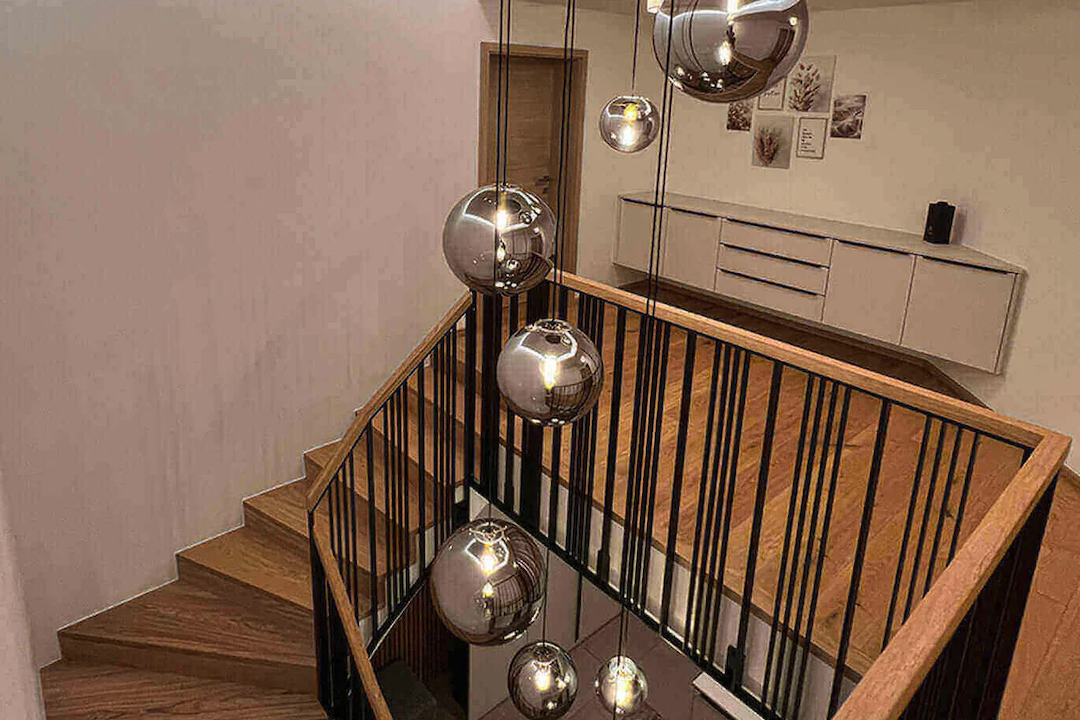
- Grand Staircases: For sprawling, multi-story stairwells with high ceilings, larger, more elaborate Neo Deco chrome geometric pendants can become impressive focal points. Imagine a cluster of several pendants or a single, substantial fixture that commands attention.
- Standard Staircases: In more typical homes, a medium-sized single pendant or a symmetrical arrangement of two or three smaller pendants at staggered heights can work beautifully. The goal is to provide adequate lighting without overwhelming the space.
- Narrow or Compact Staircases: For smaller areas, opt for more streamlined designs. A sleek, linear geometric pendant or a series of smaller, vertically aligned shades can elongate the space and provide focused light.
The Right Placement Matters
Where you hang the pendant is as important as the pendant itself.
- Center of the Stairwell: For a dramatic effect, position the pendant directly in the center of the widest part of your stairwell, ensuring it’s at a safe height.
- Over the Landing: A pendant placed over a landing can act as a gentle guide and a warm welcome.
- Along the Flight: For longer flights, consider a series of pendants spaced evenly to provide consistent illumination and create a rhythmic visual flow.
- Height Considerations: Ensure the pendant is hung high enough to avoid any head-bumping hazards. The general rule of thumb for a central pathway is at least 7 feet from the floor. If it’s over a landing or a piece of furniture, this can be adjusted, but safety is paramount.
Balancing Scale and Proportion
This is crucial for achieving a cohesive look.
- Too Small: A pendant that’s too small can get lost, failing to make the statement you’re hoping for and leaving the staircase feeling dull.
- Too Large: An overly large pendant can overwhelm a smaller staircase, making the space feel cramped and even dangerous.
- Visual Weight: Consider the “visual weight” of the pendant. A complex, multi-tiered geometric fixture will feel heavier than a simple, open-frame design in the same size.
Design Inspiration: Neo Deco Chrome Geometric Styles
The term “Neo Deco Chrome Geometric” encompasses a variety of styles. Understanding these variations will help you pinpoint the perfect fixture for your home.
Linear and Rectilinear Designs
These designs often feature clean, straight lines, squares, and rectangles, reminiscent of classic Art Deco architecture.
- Cage-like Structures: Many pendants feature intricate cages made of intersecting lines, creating a striking geometric pattern within. These can have an open or enclosed feel, depending on the specific design.
- Stacked Rectangles: Imagine a series of chrome rectangles stacked or arranged in an offset manner, creating a modern, architectural look.
- Linear Pendants: These are often elongated and rectangular, sometimes with integrated geometric patterns within the shade itself. They’re excellent for hallways and longer staircases.
Circular and Spherical Motifs
While Art Deco is known for its sharp angles, circular elements were also prevalent, often signifying dynamism and the modern age.
- Concentric Circles: Designs that incorporate multiple concentric circles in chrome can create a sense of depth and movement.
- Orbital Designs: Some pendants feature geometric arrangements that mimic planetary orbits or abstract celestial bodies, rendered in chrome.
- Globe with Geometric Insets: A chrome sphere might have geometric cutouts or overlays, allowing light to escape and cast interesting patterns.
Multi-faceted and Crystalline Forms
Drawing inspiration from the glamour of precious stones and architectural facets, these designs often play with angles and light reflection.
- Dodecahedron and Icosahedron Shapes: Think of the complexity of these geometric solids, translated into metal. These designs are often breathtaking and add a significant “wow” factor.
- Angular Facets: Pendants that mimic the facets of a cut gemstone, with numerous angled surfaces, catch and reflect light in a dazzling way. These are great for adding a touch of luxury.
- Asymmetrical Geometric Arrangements: Sometimes, the geometry is less strict, with an artful arrangement of various geometric shapes – triangles, squares, hexagons – that create a unique, dynamic form.
Material Considerations and Light Quality
When choosing your Neo Deco chrome geometric pendant, pay attention not just to the shape but also to the materials and how they affect the light.
The Finish of Chrome
Chrome comes in various finishes, each offering a slightly different aesthetic.
- Polished Chrome: This is the classic, highly reflective, mirror-like finish. It’s bright and contemporary, excellent for maximizing light.
- Brushed or Satin Chrome: This finish has a softer, matte appearance with subtle directional brushing. It’s less prone to showing fingerprints and offers a more understated elegance.
- Antique or Dark Chrome: These finishes have a more muted, sometimes darker, tone, offering a vintage feel while still maintaining the metallic gleam. They can add a touch of gravitas.
The Luminescence: How it Illuminates
The way the light is diffused and cast is a critical functional aspect of your pendant.
- Open Designs: Pendants with open geometric structures, like cages, tend to cast light outwards, illuminating the surrounding area more broadly. They create interesting shadow play on walls.
- Enclosed Designs: If the geometric form encloses the bulb, the light might be more directed or diffused through frosted glass or other materials. This can create a softer, more ambient glow.
- Glass Components: Some Neo Deco designs incorporate glass elements – clear, frosted, or even subtly colored – within or around the geometric frame. This can significantly alter the light quality, softening it or adding a decorative touch.
Bulb Choice and its Impact
The type of bulb you choose can dramatically alter the mood and functionality of your pendant.
- LED Bulbs: These are energy-efficient and come in various color temperatures. Warm white (around 2700K) creates a cozy atmosphere, while cool white (around 4000K) is brighter and more modern.
- Edison/Filament Bulbs: If your pendant has an open design, showcasing the bulb, opting for decorative LED filament bulbs can enhance the vintage charm of the Neo Deco style.
- Dimmable Options: For maximum flexibility, choose dimmable bulbs and a compatible dimmer switch. This allows you to adjust the lighting to suit different times of day and moods.
Installation and Practicalities
Getting your new pendant light installed safely and correctly is essential. While aesthetics are important, so is functionality and adherence to building codes.
DIY vs. Professional Installation
The decision to tackle this yourself or hire an electrician often depends on your comfort level with electrical work and the complexity of the fixture.
- DIY Considerations: If you’re experienced with home electrical work, have the right tools, and are confident in your abilities, you might consider DIY. However, always ensure you turn off the power at the breaker and follow all safety guidelines meticulously.
- When to Call a Professional: For most people, especially with ceiling fixtures, hiring a qualified electrician is the safest and most advisable option. They have the expertise to ensure the wiring is correct, the fixture is securely mounted, and everything complies with local building codes. This is especially true if you’re adding a new circuit or modifying existing wiring.
Ensuring Safety and Compliance
Safety is non-negotiable when it comes to lighting installation.
- Weight Support: Ensure your ceiling box is rated to support the weight of the pendant. Some heavier fixtures may require additional bracing. Your electrician will know how to assess this.
- Wiring Standards: Proper wiring is crucial to prevent shorts, fires, and electrical shocks. An electrician will ensure all connections are sound and meet current electrical codes.
- Building Codes: Different regions have specific building codes regarding electrical installations. A professional electrician will be familiar with these and ensure your installation is compliant, which is also important for insurance purposes.
Maintenance and Longevity
Once installed, how do you keep your Neo Deco chrome pendant looking its best?
- Regular Cleaning: Dust can accumulate on chrome and geometric surfaces, dulling their shine. A soft microfiber cloth dampened with water or a mild cleaning solution (specifically for chrome) is usually sufficient for regular dusting.
- Avoiding Harsh Chemicals: Never use abrasive cleaners, steel wool, or harsh chemicals on chrome, as they can scratch or damage the finish.
- Checking Connections: Periodically, perhaps once a year, it’s a good idea to have an electrician check the wiring connections to ensure they remain secure and free from corrosion.
- Bulb Replacement: When it’s time to replace a bulb, ensure the power is off and the fixture has cooled down completely.
The Finishing Touches: Complementing Your Neo Deco Pendant
A Neo Deco chrome geometric pendant is a statement piece, but it doesn’t have to be a solitary one. It can be beautifully integrated into a larger design scheme.
Wall Color and Accents
The color of your walls will significantly impact how the chrome pendant looks.
- Dark, Rich Tones: Deep blues, emerald greens, or charcoal grays can create a dramatic, luxurious backdrop that makes the chrome really pop.
- Neutral Palettes: Whites, grays, and beiges offer a more subtle contrast, allowing the pendant’s design to be the primary focus.
- Bold Colors: For a truly daring space, consider jewel tones or even a vibrant primary color. The key is balance – let the walls complement, not compete with, the pendant.
Complementary Decor Elements
To tie the Neo Deco aesthetic together, consider other decor elements.
- Geometric Patterns Elsewhere: Introduce other geometric accents, perhaps in rugs, throw pillows, or framed artwork.
- Metallic Accents: Incorporate other metallic finishes that work with chrome, such as brushed nickel, stainless steel, or even hints of brass or gold if done thoughtfully.
- Textures: Mix smooth, reflective surfaces with softer textures like velvet, boucle, or natural wood to add depth and interest to your decor.
- Mirrors: Mirrors are a natural companion to chrome, reflecting light and enhancing the geometric play within your space.
Creating a Sense of Flow
Think about how the pendant relates to the rest of your interior design.
- Consistent Style: While the pendant is in the stairwell, try to echo some of its Neo Deco or geometric themes in adjacent rooms. This creates a cohesive feeling throughout your home.
- Lighting Layering: Don’t rely solely on your pendant. Ensure you have adequate ambient lighting in the stairwell itself (perhaps wall sconces) and that the light from your pendant blends well with the lighting in the rooms it connects.
- The Journey: Imagine the experience of ascending or descending your stairs. The pendant should enhance this journey, providing both light and a visual delight.
Neo Deco chrome geometric staircase pendant lighting offers a compelling blend of vintage sophistication and modern practicality. By understanding its design principles, considering scale and placement, and paying attention to details like material finishes and light quality, you can transform a simple staircase into a dazzling focal point that elevates your entire home.