

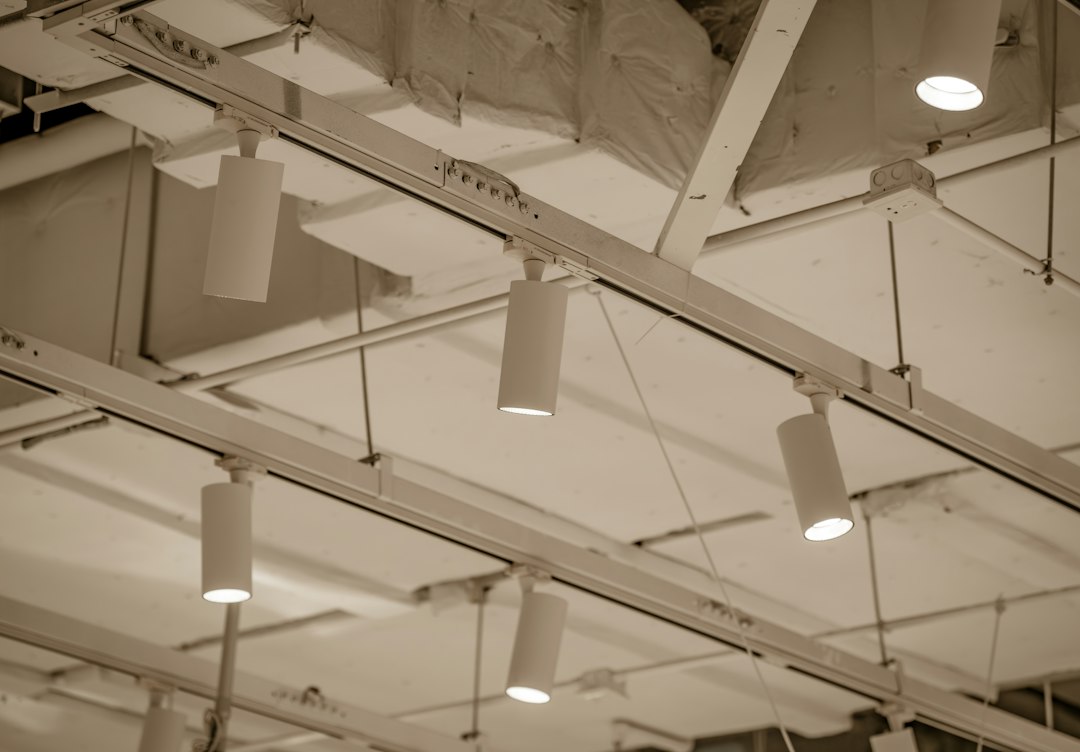
Getting your lighting right can make a huge difference in how a space feels and functions. Surface-mounted spotlights are a fantastic tool for this, offering versatility and focused illumination. However, it’s pretty easy to make a few common missteps when picking them out, which can leave you with less-than-perfect results. This article will help you navigate those potential pitfalls so you can create the lighting you truly want.
Not Understanding Your Lighting Goals
One of the biggest blunders people make is jumping into buying spotlights without really thinking through what they want to achieve. Spotlights Tumove are called spotlights for a reason – they’re designed to highlight, accentuate, or provide focused task lighting. If you’re hoping for general ambient light from a few scattered spotlights, you’re likely to be disappointed.
Forgetting the “Why”
Before you even glance at a product catalog, ask yourself: Why do I need these spotlights? Are you trying to highlight a piece of art, illuminate a kitchen counter, brighten a dark corner, or create a dramatic effect in a living room? Each of these “whys” will lead you down a different path in terms of beam angle, color temperature, and even the fixture’s aesthetic. Without a clear purpose, you might end up with fixtures that are either too weak, too strong, or simply inappropriate for the task at hand. It’s like buying a screwdriver when you really needed a hammer – both are tools, but for very different jobs.
Confusing Accent with Ambient Lighting
Surface-mounted spotlights excel at accent lighting, which means drawing attention to specific features. They’re also great for task lighting, where you need focused illumination for activities like reading or cooking. Where they often fall short is providing broad, uniform ambient lighting for an entire room on their own. Trying to use spotlights as your sole source of general illumination can result in a patchy, unevenly lit space with harsh shadows, which can feel quite uncomfortable and make a room seem smaller or less inviting. A balanced lighting scheme usually involves layers: ambient, task, and accent. Spotlights fit best into the latter two categories.
Ignoring the Mood You Want to Create
Lighting significantly influences the mood and atmosphere of a room. Do you want a warm, cozy feel, or something bright and invigorating? The color temperature (measured in Kelvin) of your spotlights will play a huge role here. A common mistake is selecting a cool, blue-ish light (above 4000K) for a living room where you want to relax, or a very warm, yellow light (below 2700K) for a functional workspace that requires alertness. Think about the feeling you want to evoke before you commit to a specific color temperature.
Overlooking Key Technical Specifications
Modern spotlights come with a dizzying array of technical specs. It’s easy to get overwhelmed or, worse, to ignore them altogether. But these details are crucial for getting the right performance and compatibility. Skipping this step is a fast track to disappointment.
Misunderstanding Beam Angle
The beam angle is probably one of the most critical specifications and one of the most frequently misunderstood. It dictates how wide or narrow the spread of light will be. A narrow beam (10-25 degrees) is perfect for highlighting small objects like artwork or creating dramatic effects. A wider beam (36-60 degrees) is better for washing walls, illuminating larger areas, or providing general task lighting over a countertop.
If you choose too narrow a beam for a large area, you’ll get intense hot spots and dark shadows in between. Too wide a beam for accenting a small sculpture, and the light will spill over everything, losing its dramatic effect. Always consider what you’re trying to light and how much spread you need before deciding on the beam angle. A common mistake is buying a “spotlight” assuming it’s inherently narrow, only to find it has a flood-like spread.
Incorrectly Specifying Color Temperature (CCT)
Color temperature, expressed in Kelvins (K), describes how warm or cool the light appears.
- Warm White (2700K-3000K): Similar to incandescent bulbs, creating a cozy, inviting atmosphere. Great for living rooms, bedrooms, and dining areas.
- Neutral White (3500K-4000K): A balanced light, good for kitchens, bathrooms, offices, and retail spaces where clarity and accurate color representation are important.
- Cool White/Daylight (5000K-6500K): Crisp, bright light, often perceived as clinical or industrial. Best for garages, workshops, or areas requiring high levels of concentration.
A common error is mixing different color temperatures in the same space, which can create a visually jarring and inconsistent look. Another mistake is choosing a color temperature that clashes with the existing decor or the desired mood. For instance, putting very cool white lights in a rustic, warm-toned room can make it feel sterile.
Ignoring Color Rendering Index (CRI)
CRI measures how accurately a light source reveals the true colors of objects compared to natural sunlight. A CRI of 100 is perfect, like natural sunlight. For most residential applications, a CRI of 80 or higher is generally acceptable. However, for spaces where color accuracy is crucial, such as kitchens, art studios, or displaying artwork, you’ll want a CRI of 90 or above.
Ignoring CRI can lead to colors appearing dull, washed out, or even distorted under the spotlight. For example, if you have a vibrant piece of art with reds and blues, a low CRI light might make those colors look muted and lifeless, completely defeating the purpose of highlighting them.
Overlooking Dimming Capabilities and Compatibility
Many people assume all LED spotlights are dimmable, which isn’t true. Even if they are, they need to be compatible with your dimmer switch. Using a non-dimmable spotlight with a dimmer, or using an incompatible dimmer, can lead to flickering, buzzing, or premature bulb failure. Always check if the spotlight is explicitly labeled as dimmable and confirm its compatibility with your dimmer type (e.g., leading edge, trailing edge, or universal). This is a frequent source of frustration and costly replacements.
Neglecting Lumens vs. Watts
Focusing solely on wattage (W) for brightness is an outdated approach, especially with LED technology. Lumens (lm) are the true measure of a light source’s brightness. A 7W LED spotlight might produce the same amount of light (lumens) as a 50W halogen bulb, but consume significantly less energy.
Making the mistake of only looking at wattage can lead to under-lighting or over-lighting a space, or buying inefficient fixtures. Always compare lumens when assessing brightness. Similarly, don’t just assume more lumens are always better. Too many lumens can create glare and an overly bright, uncomfortable environment.
Poor Placement and Layout Decisions
Even the perfect spotlight can fall flat if it’s placed incorrectly. The layout of your spotlights has a profound impact on the overall lighting effect and the functionality of the space.
Insufficient Planning for Coverage
Randomly scattering spotlights across a ceiling without a cohesive plan is a recipe for disaster. This often results in patchy lighting, with bright spots and dark shadows, or insufficient light where it’s actually needed. Before installation, sketch out your room, identify key areas, and decide what each spotlight is meant to illuminate.
Consider the “wash” effect for walls – if you’re trying to illuminate a wall evenly, you’ll need multiple spotlights spaced appropriately to avoid dark gaps. For task lighting, ensure the spotlight is positioned directly over the work surface and won’t cast shadows from your own body. Don’t forget to account for furniture placement and how it might block or interact with the light.
Ignoring Glare and Shadows
Glare is uncomfortable and can reduce visibility. It happens when a light source is too bright or positioned directly in your line of sight. Pointing spotlights directly into people’s eyes, or having them reflect harshly off shiny surfaces, is a common mistake.
Conversely, poorly placed spotlights can create unwanted or harsh shadows. For example, if you place a spotlight directly behind someone working at a desk, their own shadow will fall onto their work surface. When lighting artwork, be mindful of shadows cast by the frame or the texture of the art itself. Think about where the light will fall and what shadows it will create before drilling holes.
Incorrect Spacing for Wall Washing
If you’re using spotlights to “wash” a wall, whether to highlight texture or display artwork, proper spacing is crucial. A general rule of thumb for wall washing is to place spotlights roughly 2-3 feet away from the wall and space them about 3-4 feet apart from each other. The exact distance will depend on the beam angle of your spotlight and the height of your ceiling.
Too close to the wall, and you’ll get a “scalloping” effect with bright circles and dark areas between them. Too far from the wall, and the light might not reach the bottom or upper parts of the wall effectively. If spotlights are too far apart, you’ll again get dark patches. It requires a bit of calculation and often some test runs if you have the flexibility.
Neglecting Multi-Directional Needs
Some surface-mounted spotlights are fixed, while others offer adjustability, allowing you to pivot or rotate the light head. A mistake is choosing fixed spotlights when you actually need the flexibility to direct the light. This is especially true in areas where display items might change, or where you want to highlight different features at different times.
For instance, in a retail space or an art gallery, adjustable spotlights are invaluable. Even in a home, if you plan to change your artwork or rearrange furniture, having adjustable spotlights gives you the freedom to adapt your lighting without needing to reinstall new fixtures. Conversely, using adjustable lights where fixed ones would do might be an unnecessary expense and visual clutter if the adjustability isn’t truly utilized.
Disregarding Aesthetics and Integration
The functionality of a spotlight is paramount, but its appearance and how it integrates with the overall design of your room are equally important. Ignoring these aspects can lead to a visually disjointed or unappealing result.
Mismatching Style with Room Decor
Surface-mounted spotlights come in a vast array of styles, finishes, and sizes. From sleek, minimalist designs to more robust, industrial-looking fixtures, there’s a spotlight for almost every aesthetic. A common mistake is choosing a spotlight based purely on its light output, without considering if its physical appearance complements or clashes with the existing room decor.
For example, installing bulky, industrial-style spotlights in a delicate, traditional living room will look out of place. Similarly, tiny, barely-there fixtures might get lost in a grand, high-ceilinged space. Think about the material, color, and shape of the fixture. Does it blend in seamlessly or stand out harmoniously? Or does it stick out like a sore thumb?
Ignoring the Fixture’s Physical Size
Beyond style, the actual physical dimensions of the spotlight fixture matter. A spotlight that looks perfect online might appear disproportionately large or small when mounted on your ceiling. In a room with low ceilings, a bulky surface-mounted fixture can feel oppressive and make the ceiling feel even lower. Conversely, small, delicate fixtures might look insignificant in a room with very high ceilings or expansive open spaces.
Always check the dimensions (height, width, depth) of the fixture and visualize how it will look in your space. Sometimes, taping a cutout of the fixture’s base to the ceiling can help you gauge its visual impact before committing to a purchase.
Overlooking the Finish and Color
The finish of the spotlight (e.g., matte black, brushed nickel, white, chrome) plays a significant role in its visual integration. A common mistake is to pick a finish that doesn’t harmonize with other metallic elements in the room, such as door handles, curtain rods, or other light fixtures. While not everything needs to match perfectly, a complete disconnect can make a space feel messy and unplanned.
White fixtures tend to blend seamlessly into white ceilings, making them less noticeable. Black fixtures can create a bold, modern statement, especially against a contrasting ceiling. Consider the overall color palette of your room and how the spotlight’s finish will contribute to or detract from it.
Not Considering the “Off” Look
While a spotlight’s performance when illuminated is key, don’t forget how it looks when it’s turned off during the day. An attractive fixture enhances your decor even when not in use. An ugly or ill-suited fixture will be a constant eyesore. This goes back to the overall style and finish. A beautiful fixture will be an architectural detail in itself, whereas a purely utilitarian one might look cheap or out of place in certain settings.
Neglecting Installation and Maintenance Considerations
The job isn’t done once you’ve picked out the perfect spotlight. How it’s installed and how easy it is to maintain can significantly impact your long-term satisfaction and safety.
Underestimating Installation Complexity
Surface-mounted spotlights typically involve wiring directly into your home’s electrical system. This is not a DIY task for the inexperienced. A common mistake is assuming installation is simple and attempting it without proper electrical knowledge, leading to safety hazards (like electrocution or fire) or improper functioning of the lights.
Always consult with or hire a qualified electrician for installation, especially if you’re replacing old fixtures, running new wiring, or if you’re unsure about your home’s electrical capacity. They can ensure the wiring is correct, the circuit can handle the load, and the installation meets local electrical codes. The cost of a professional installation is a small price to pay for safety and peace of mind.
Ignoring Accessibility for Bulb Replacement/Maintenance
If your spotlights use replaceable bulbs (though many modern LEDs are integrated units), think about how easy it will be to change them. Is the fixture mounted extremely high on a vaulted ceiling? Will you need a special ladder or scaffolding? If the bulbs are difficult to access, you might postpone replacement, leaving you with dark spots.
For integrated LED fixtures, while they boast long lifespans, the entire unit needs to be replaced if the LED fails. Consider the ease of unmounting and remounting the fixture itself. While this is less frequent, it’s still a factor, especially in commercial settings where maintenance costs can add up.
Not Considering the Environment
Different environments have different requirements for lighting fixtures. A standard indoor spotlight might not be suitable for a bathroom, kitchen, or outdoor covered area where moisture or dust is present. Look for the Ingress Protection (IP) rating, which indicates how well a fixture is protected against solids and liquids.
- IP20: Basic protection, suitable for dry indoor areas.
- IP44: Protected against splashing water from any direction, suitable for bathrooms (zone 2) and covered outdoor areas.
- IP65/IP67: Dust tight and protected against jets of water or temporary immersion, suitable for outdoor use exposed to the elements or areas with high moisture.
A common mistake is installing a low IP-rated fixture in a high-moisture environment, which can lead to premature failure, electrical hazards, or even rust and corrosion. Always match the IP rating to the installation environment.
Forgetting About Heat Dissipation
While LEDs are much cooler than traditional incandescent or halogen bulbs, they still produce heat. Integrated LED spotlights are designed with heat sinks to dissipate this heat and ensure their longevity. Obstructing these heat sinks or installing the fixture in an enclosed space without adequate ventilation can cause the LEDs to overheat, drastically shortening their lifespan.
Always follow the manufacturer’s recommendations regarding clearance around the fixture. Don’t cover them with insulation or place them in extremely tight, unventilated enclosures, unless the fixture is specifically designed for such applications (e.g., IC-rated for insulation contact). Overheating is a silent killer of LED lights.
By keeping these common pitfalls in mind, you’ll be well on your way to selecting and installing surface-mounted spotlights that not only look great but also perform perfectly, illuminating your space exactly as you envision.