
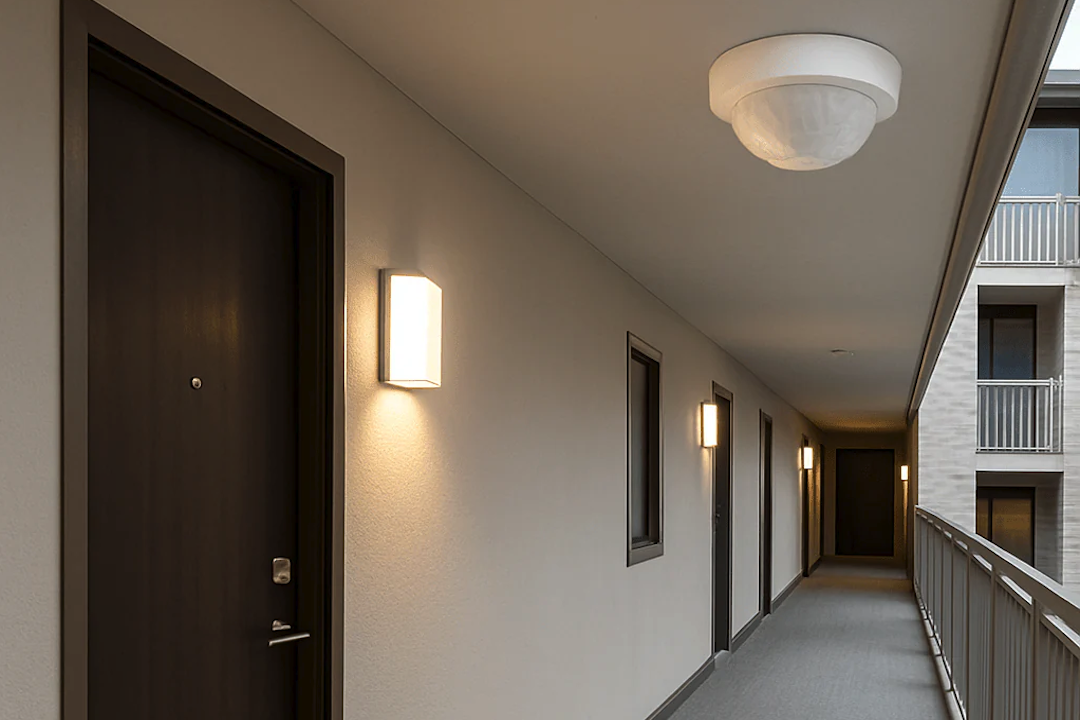
So, you’re curious about those hallway lights that magically turn on when you walk by? That’s smart hallway lighting, and most of them use motion sensors to do the trick. They’re pretty handy, and honestly, a lot more practical than you might think. Instead of fumbling for a light switch in the dark, these lights just… work. They save energy, make your home feel more modern, and can even be a safety feature. Let’s dive into what makes them tick and why you might want one.
When we talk about “smart” hallway lighting, we’re usually referring to lights Condepot that go beyond just being a bulb in a fixture. The “smart” part primarily comes from their ability to respond to their environment or be controlled remotely. For hallway lights, the most common “smart” feature is the integration of motion sensors. This allows the light to detect your presence and activate automatically.
Beyond Passive Illumination
Traditional hallway lights are passive. You walk by, you hit the switch, it turns on. You leave, you hit the switch again, it turns off. There’s no intelligence involved. Smart hallway lighting, on the other hand, is proactive. It anticipates your needs.
The Power of Sensors
The core of most smart hallway lighting systems lies in their sensors. While motion detection is the most prevalent, other sensors can contribute to the “smartness.”
Motion Detection: The Backbone
This is the star of the show. Motion sensors detect movement within a designated area. When movement is detected, they send a signal to the light to turn on. The technology behind them can vary, but common types include Passive Infrared (PIR) sensors, which detect heat signatures from moving bodies, and microwave sensors, which emit low-level microwaves and detect changes in the reflected signal.
Ambient Light Sensing: Avoiding Unnecessary Turns
Some smarter systems also incorporate ambient light sensors. This means the light won’t just switch on if you walk by during broad daylight. It will only activate when it’s actually dark enough to need illumination, further improving energy efficiency.
Connectivity and Integration
The “smartness” can extend further if the lighting system is connected to a smart home network.
Wi-Fi and Bluetooth Connectivity
Many smart lights can connect to your home’s Wi-Fi or via Bluetooth. This opens up possibilities for control through smartphone apps and integration with other smart devices.
Smart Home Hub Compatibility
For the truly integrated experience, smart hallway lights can often be linked to smart home hubs like Amazon Alexa, Google Assistant, or Apple HomeKit. This allows for voice control and inclusion in automated routines.
How Do Motion Sensor Corridor Lights Actually Work?
The magic behind those lights that illuminate just as you approach is the motion sensor. It’s a surprisingly simple yet effective piece of technology that makes navigating your home in the dark much less of a chore.
The Sensor’s Role: Detecting Presence
At its heart, the motion sensor is the eyes and ears of the system. It’s constantly monitoring its surroundings for any signs of life.
Passive Infrared (PIR) Sensors: The Heat Detectors
One of the most common types of motion sensors used in hallway lights is the Passive Infrared (PIR) sensor. These sensors don’t emit any energy themselves; instead, they passively detect infrared radiation, which is essentially heat.
- How it works: Our bodies, and indeed all warm objects, emit infrared radiation. PIR sensors have lenses that divide the field of view into segments. When a warm object, like a person, moves from one segment to another, the sensor registers a change in the infrared pattern. This change is interpreted as motion and triggers the light.
- Pros: PIR sensors are generally inexpensive, consume very little power, and are good at detecting human-sized objects.
- Cons: They can be triggered by other heat sources, like sunlight hitting a radiator, and are less effective at detecting slower or very cold objects. They also require a clear line of sight.
Microwave Sensors: The Wave Watchers
Another type of sensor you might encounter is the microwave or radar sensor. These work on a different principle.
- How it works: Microwave sensors emit low-level microwave energy into the surroundings. This energy bounces off objects and returns to the sensor. If an object moves, the reflected microwaves will have a slightly different frequency (due to the Doppler effect). The sensor detects this frequency shift and interprets it as motion.
- Pros: They can often detect motion through thin walls or other obstacles, and they are generally more sensitive to smaller movements than PIR sensors.
- Cons: They can be more prone to false alarms from things like fans or moving curtains, and they tend to consume slightly more power than PIR sensors. They can also be more expensive.
Dual Technology Sensors: The Best of Both Worlds
To overcome the limitations of single-sensor technologies, some high-end lights use dual-technology sensors.
- How it works: These sensors combine both PIR and microwave technology. The light will only activate if both sensors detect motion simultaneously. This significantly reduces the chance of false triggers while maintaining reliable detection.
The Signal to Light: Activation Logic
Once the motion sensor detects movement, it doesn’t just instantly flood your hallway with blinding light. There’s a little bit of logic involved.
Triggering the Illumination
The sensor sends a signal to the light’s internal circuitry. This circuitry then commands the LED or bulb to turn on.
Adjustable Sensitivity and Range
Most good motion sensor lights allow you to adjust how sensitive the sensor is and how far it can detect motion. This is crucial because you don’t want your light to turn on every time a spider crawls across the ceiling, nor do you want to have to sprint across the hallway to activate it.
Dampening the Flickering
Modern LEDs and their power supplies are pretty efficient. When a motion sensor triggers a light, the goal is usually a smooth, quick transition from off to on, not a jarring flicker. The circuitry is designed to manage this.
Timer and Timeout Features: Not Being Left in the Dark (or for Too Long)
One of the most practical aspects of these lights is their ability to turn off on their own.
Setting the Duration
You can typically set a timer for how long the light stays on after motion is no longer detected. This can range from a few seconds to several minutes. This prevents the light from staying on all night if you’re just sitting in the hallway reading.
Preventing Constant On-Off Cycles
If you’re spending a bit of time in the hallway, say getting something from a cupboard, you don’t want the light to keep turning on and off every few seconds. The timeout feature is usually designed with a slight delay or sensitivity adjustment to avoid this.
Where Can You Benefit Most From Smart Hallway Lighting?
The hallway is the obvious place, but these motion-sensing lights are surprisingly versatile and can improve functionality in several areas of your home. Think about the transitions, the spaces you use briefly, and the places where fumbling for a switch is a nuisance.
The Main Hallway: Convenience and Safety
This is the primary use case, and for good reason.
Navigating in the Dark
Imagine waking up in the middle of the night and needing to go to the bathroom. Instead of stumbling in the dark, squinting for the light switch, your hallway gently illuminates as you move. It’s a small luxury that makes a big difference.
Reducing Tripping Hazards
A well-lit hallway, especially one that lights up automatically when you need it, is a significant safety improvement. It helps prevent trips and falls, particularly for children, the elderly, or anyone with mobility issues.
Enhancing Home Security (Subtle Deterrent)
While not a primary security system, lights that turn on unexpectedly can sometimes deter opportunistic intruders who prefer to operate in complete darkness. It makes your home appear occupied and more difficult to breach unnoticed.
Steps and Staircases: Essential for Safety
These are high-risk areas for falls, and smart lighting can be a game-changer.
Illuminating the Path Up and Down
Installing motion sensor lights at the top and bottom of staircases, or even along the stairs themselves, ensures a clear and safe path no matter when you need it. The light can be set to activate as you approach the first step or the top landing.
Gradual Illumination
Some systems allow for progressive lighting, where lights turn on sequentially as you ascend or descend. This creates a more natural and less jarring experience than a single bright light.
Utility Rooms and Closets: No More Fumbling
These small spaces often have awkward light switch placements.
Instant Access to Storage
Whether it’s a linen closet, a pantry, or a laundry room, a motion sensor light means you can instantly see what you’re looking for without having to push clothes aside to find the switch.
Efficient Use of Energy
These are often spaces that are only entered for short periods. An automatic shut-off timer prevents the light from being left on unnecessarily, saving energy.
Garage and Basement Access: Welcoming and Practical
These areas can also be dark and utilitarian, and smart lighting makes them more user-friendly.
A Brighter Welcome
As you approach your garage door or the entrance to your basement, motion sensor lights can provide immediate illumination, making it easier to find your keys, navigate obstacles, or simply feel more secure entering the space.
Illuminating Work Areas
If you use your garage or basement for hobbies or storage, these lights can provide convenient, hands-free lighting when you enter the area.
Types of Smart Hallway Motion Lights: What to Look For
It’s not just about a single motion-sensing fixture. There’s a range of options, from simple plug-in units to integrated ceiling lights. Understanding these variations will help you pick the best fit for your needs.
Standalone Fixtures: Easy Installation, Visible Presence
These are lights where the motion sensor is built directly into the light fixture itself.
Flush Mount Ceiling Lights
Common in hallways, these mount directly to the ceiling and are a good all-in-one solution.
- Pros: Integrated design, often require minimal wiring if replacing an existing fixture, covers a good amount of space.
- Cons: Sensor placement is fixed, can be less aesthetically pleasing than separate fixtures for some.
Wall Sconces
Often used to flank doorways or in longer corridors, wall sconces with integrated motion sensors offer directional light.
- Pros: Can provide ambient and functional light, adds decorative element.
- Cons: Sensor coverage might be more limited than ceiling units depending on height and angle.
Strip Lights and Under-Cabinet Lights: Subtle and Versatile Illumination
These are usually LED strips that can be mounted under shelves, along baseboards, or behind furniture.
LED Strip Lights with Integrated Sensors
Some LED strips come with a small, discreet motion sensor module that can be positioned separately or attached to the strip itself.
- Pros: Highly customizable, can be used for accent lighting, very energy efficient.
- Cons: May require a bit more DIY installation (cutting strips, connecting wires), sensor placement is critical for effective coverage.
Puck Lights or Small Spotlights
These are small, battery-powered or plug-in lights that can be placed strategically. Many have motion sensors built into them.
- Pros: Extremely easy to install, battery-powered options are portable and require no wiring, good for small closets or cabinets.
- Cons: Limited brightness, battery life can be a concern for frequently used lights, coverage is localized.
Smart Bulbs with Motion Sensing Capabilities: Leveraging Existing Fixtures
This is a growing category where the “smartness” and motion sensing are contained within the bulb itself.
Wi-Fi or Bluetooth Enabled Bulbs
These bulbs screw into standard sockets but contain the motion sensor and connectivity.
- Pros: No need to replace the entire fixture, easy to upgrade existing lights, often controllable via smartphone app.
- Cons: Sensor performance can vary significantly between brands, may be limited by the fixture’s design and placement, can be more expensive than regular LED bulbs.
Plug-In Nightlights with Motion Sensors: The Simplest Option
For a quick and easy solution, especially for children’s rooms or low-traffic areas.
Basic Plug-In Units
These plug directly into an electrical outlet and often have a small, integrated light that activates when motion is detected.
- Pros: Ultra simple to use, no installation required, great for temporary needs or renters.
- Cons: Limited brightness and illumination area, usually less controllable in terms of sensitivity or duration.
Installation and Setup: Getting Your Smart Light Working
Installing motion sensor hallway lights can range from incredibly simple to requiring some basic electrical knowledge. Most modern options are designed for ease of use, but it’s always good to be prepared.
Planning Your Placement: The Key to Success
Where you put the light (or the sensor) is probably the most important factor for it to work effectively.
Sensor Coverage Area
Consider the “cone of vision” or detection pattern of the sensor. You want it to cover the path you’ll be walking. If the sensor is too low, it might not pick up movement from further away. If it’s too high, it might miss subtle movements.
Avoiding False Triggers
Think about what else might trigger the sensor.
- Heat Sources: Avoid placing PIR sensors near radiators, direct sunlight hitting a wall, or vents that blow hot air, as these can cause false activations.
- Moving Objects: Try not to point microwave sensors directly at windows where tree branches might sway or at busy doorways that are frequently opened and closed by others.
Light Intensity and Direction
Think about how much light you need and where you want it to shine. A ceiling fixture will cast light downwards, while sconces will illuminate sideways.
DIY Installation: Basic Steps for Most Fixtures
For most common ceiling-mounted or wall-mounted fixtures, the process is similar to replacing a standard light.
Safety First: Turn Off the Power
This is the most critical step. Locate your home’s electrical breaker box and turn off the circuit breaker that controls the hallway light. Double-check by trying to flip the existing light switch – it should not turn on.
Removing the Old Fixture
Carefully unscrew or unclip the old light fixture. You’ll usually find wires connected to terminals.
Connecting the New Fixture
Most new fixtures will come with wire connectors (e.g., wire nuts) and instructions. Typically, you’ll connect the black wire from the house to the black wire on the fixture, the white wire to the white wire, and the bare or green wire (ground) to the grounding screw or wire. If you’re unsure about wiring, it’s always best to consult an electrician.
Mounting and Testing
Secure the new fixture to the ceiling or wall according to the manufacturer’s instructions. Once mounted and wired, turn the power back on at the breaker box. Test the motion sensor by walking past it.
Plug-In and Battery-Powered Options: The No-Brainer Approach
If you opt for plug-in nightlights or battery-powered puck lights, installation is usually as simple as plugging them in or inserting batteries and then choosing a mounting location (often with adhesive strips).
Simple Placement
For plug-in units, find an outlet in your hallway. For battery-powered lights, use the included adhesive or screws to attach them where you need light.
Testing the Detection Range
Walk by the unit at different distances to ensure it’s detecting your movement effectively.
Smart Bulb Installation: Simpler Than You Think (Mostly)
Installing a smart bulb with motion sensing is as easy as screwing in a regular bulb.
Screw in the Bulb
Turn off the power to the fixture (as with other installations). Screw the smart bulb into the socket just like any other bulb.
App Setup
Once the power is back on, you’ll typically need to download the manufacturer’s app for the bulb. This app will guide you through connecting the bulb to your Wi-Fi network and configuring its settings, including any motion sensor features.
Customization and Advanced Features: Fine-Tuning Your Smart Lighting
Beyond just turning on and off, many smart hallway lights offer a surprising amount of customization to tailor them to your specific needs and preferences. This is where the “smart” really shines.
Adjusting Sensitivity and Range: Dialing It In
This is arguably the most important feature for optimizing performance.
Fine-Tuning Motion Detection
Most decent motion sensor lights allow you to adjust how sensitive the sensor is to movement and how far it can detect.
- Lowering Sensitivity: If your light is activating from passing cars outside or pets, you might need to reduce the sensitivity.
- Increasing Sensitivity: If the light isn’t turning on reliably, you might need to increase it.
- Adjusting Range: This controls how far away the sensor can detect motion. You might want a shorter range for a small landing and a longer range for a long hallway.
Setting the Timeout Duration: How Long It Stays On
This feature controls how long the light remains illuminated after no motion is detected.
- Short Durations (e.g., 30 seconds to 1 minute): Good for quick pass-throughs and maximum energy saving.
- Longer Durations (e.g., 5 minutes or more): Better if you tend to spend more time in the hallway, perhaps reading or looking for something.
Ambient Light Sensing: Only When Needed
This is a fantastic feature for energy efficiency.
- How it Works: Lights with ambient light sensors (also called photocells) will only activate their motion detection when the surrounding light level drops below a certain threshold.
- Benefit: This means your hallway light won’t turn on during the day when it’s not needed, even if you walk past it.
Scheduling and Timers: Automating Sequences
For smart bulbs or Wi-Fi connected fixtures, advanced scheduling options are often available.
- Setting Activation Times: You can schedule lights to turn on or off at specific times, which can be useful for mimicking occupancy when you’re away.
- Creating Routines: Integrate your hallway light into broader smart home routines. For example, a “Goodnight” routine could turn off all lights except for a dim, motion-activated hallway light.
Dimming and Brightness Control: Setting the Mood
Some smart lights offer adjustable brightness levels.
- Subtle Illumination: You might prefer a dimmer light in the hallway at night, which is less jarring.
- Task Lighting: For areas where you might need more light, you can set a brighter default or have it brighten upon motion detection.
Color Temperature Settings: Warm vs. Cool Light
While perhaps less common for hallway-specific motion lights, some smart bulbs offer tunable white light.
- Warm White: Creates a cozy, relaxing atmosphere.
- Cool White: Can feel more invigorating and is often preferred in workspaces.
You can choose a color temperature that suits your preference for the hallway environment.
Integration with Smart Home Ecosystems: Voice Control and Automation
This is where the true “smartness” comes in for connected systems.
- Voice Commands: Control your lights with your voice through assistants like Alexa or Google Assistant. “Hey Google, turn on the hallway light.”
- Automated Routines: As mentioned, you can link your hallway lights to other smart devices. For instance, a smart door lock could trigger the hallway light to turn on when you unlock your front door.
By understanding these features, you can select a smart hallway lighting system that’s not just functional but also perfectly tailored to your lifestyle and home.