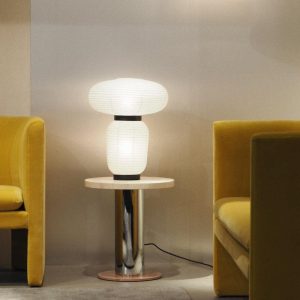

Bathroom table lamps are generally not recommended for vanity corner lighting. For effective and safe illumination in a bathroom vanity corner, especially in contemporary settings, wall-mounted fixtures like sconces, integrated LED mirrors, or linear light bars are usually much better options. While designers might occasionally incorporate a decorative, dry-rated table lamp for ambiance in a very large, well-ventilated powder room with ample counter space, it’s an unusual and often impractical choice for a primary or even secondary bathroom vanity due to space constraints, electrical safety concerns, and the need for focused, shadow-free task lighting.
When we talk about lighting a vanity, especially in a corner, we’re looking for illumination that helps you see clearly for tasks like applying makeup, shaving, or styling hair. Table lamps Yigo typically fall short here for a few key reasons.
Task Lighting Challenges
Traditional table lamps are designed to throw light upwards and outwards, creating a general glow. For a vanity, you need something that casts even light directly onto your face, from both sides if possible, to minimize shadows.
- Shadow Play: A single table lamp often creates harsh shadows on your face, particularly if placed to one side. This makes detailed tasks difficult and can distort how you see yourself.
- Directional Control: Most table lamps don’t offer the precise directional control needed to illuminate specific areas of your face without creating glare or shadows elsewhere.
Space Constraints
Bathroom vanity countertops, especially in corners, often have limited space. Adding a table lamp can quickly become a clutter issue.
- Countertop Real Estate: Even small table lamps can take up valuable counter space that’s better used for toiletries, brushes, or small appliances.
- Corner Fit: Lamps with wider bases or shades can feel bulky and awkward in a corner, often forcing them too far back or forward from the mirror. This limits maneuverability and effective light placement.
Electrical Safety in High-Moisture Areas
Water and electricity don’t mix, and bathrooms are inherently damp environments. This is a crucial safety consideration.
- Damp vs. Wet Rated: Most table lamps are not designed for bathroom environments. They typically lack the necessary “damp-rated” or “wet-rated” certification required for areas exposed to moisture or humidity.
- Proximity to Water: A table lamp sitting on a counter is closer to sinks and potential splashes than a wall-mounted fixture. This increases the risk significantly. Using unrated electrical appliances in these zones can be hazardous.
Better Alternatives for Contemporary Vanity Corner Lighting
Now that we’ve covered why table lamps are usually not the right fit, let’s explore what does work well for contemporary vanity corner lighting. The goal is even, shadow-free illumination that’s both functional and integrates with your bathroom’s design.
Wall-Mounted Sconces
Sconces are a classic and highly effective choice for vanity lighting. They can be mounted on either side of a mirror or above it, providing balanced light.
- Placement for Even Light: For corner vanities, two sconces (one on each side of the mirror) are ideal. This ‘lighting from the sides’ approach minimizes shadows on your face. If space is tight, a single, longer sconce mounted horizontally above the mirror can also work, though it’s less effective at eliminating shadows under the chin and eyes.
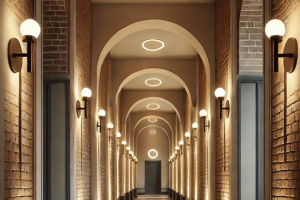
- Contemporary Styles: Modern sconces come in sleek, minimalist designs. Think simple cylinders, cubes, or linear bars in brushed metal finishes like chrome, matte black, or brushed nickel. Opal or frosted diffusers are common for soft, even light.
- Specific Types:
- Linear Bar Sconces: These provide a continuous strip of light, often vertically mounted.
- Geometric Sconces: Features clean lines and shapes, sometimes with integrated LED panels.
- Adjustable Sconces: While less common for vanity, some offer slight adjustability for precise light direction.
Integrated LED Mirrors
These mirrors have light sources built directly into their frames or behind the glass, offering a seamless and modern look.
- Seamless Design: The biggest advantage is their integrated nature. No separate fixtures cluttering the wall or counter.
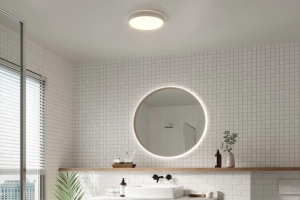
- Even Illumination: Many integrated LED mirrors feature perimeter lighting or backlit panels, which project light evenly onto your face.
- Feature-Rich: Modern versions often include anti-fog capabilities, touch controls, dimming functions, and even color temperature adjustments (from warm to cool white).
- Installation Considerations: These require electrical wiring directly behind the mirror, often necessitating professional installation.
Linear Light Bars
Similar to elongated sconces, linear light bars provide a continuous, even strip of light. They can be mounted horizontally or vertically.
- Horizontal Placement Above Mirror: A single, long linear light bar centered above the vanity mirror is a popular choice for contemporary designs. Ensure it’s long enough to span most of the mirror’s width for best effect.
- Vertical Placement Next to Mirror: Using two linear light bars, one on each side of the mirror, provides excellent cross-illumination, minimizing shadows. This is akin to using two tall, slender sconces.
- Sleek Aesthetics: These fixtures often have a very low profile and come in minimalist designs, fitting well with contemporary bathroom decor.
- LED Technology: Most contemporary linear light bars utilize LED technology, offering energy efficiency, long lifespan, and various color temperatures.
Recessed and Track Lighting (Supplemental)
While not primary vanity lighting, recessed and track lights can complement your main vanity light source.
- General Ambient Light: Recessed downlights in the ceiling provide overall ambient light for the bathroom, preventing the vanity area from becoming an isolated spot of brightness.
- Accent Lighting: Small, directional recessed lights or track lighting fixtures can be used to highlight architectural features or artwork, but typically aren’t pointed directly at the face for vanity tasks due to potential glare and shadows.
- Damp-Rated Requirement: Any recessed or track lighting used in a bathroom must be damp-rated.
Key Considerations for Choosing Vanity Lighting
Beyond the type of fixture, several factors influence how effective and appealing your vanity lighting will be.
Light Quality and Color Temperature
This refers to how light appears and how accurately it renders colors.
- Color Rendering Index (CRI): Aim for a high CRI, ideally 90 or above. A high CRI means colors (like your skin tone or makeup shades) will appear more true to life under the light. Lower CRI can make colors look washed out or distorted.
- Color Temperature (Kelvin): This dictates whether the light appears warm (yellowish) or cool (bluish).
- 2700K-3000K (Warm White): Creates a cozier, more relaxing atmosphere. It’s often preferred for general ambient lighting but can sometimes make makeup application tricky if too yellow.
- 3500K-4000K (Neutral White/Cool White): This range is often considered ideal for task lighting, as it’s bright and clear without being overly blue. It closely mimics natural daylight, which is great for makeup application and grooming.
- 4500K-5000K (Daylight): Very bright and cool, sometimes perceived as slightly harsh for prolonged use, but excellent for very precise tasks.
- Consistency: Try to maintain a consistent color temperature across all light sources in the bathroom for a harmonious look.
Dimming Capabilities
The ability to adjust light intensity is a significant advantage.
- Versatility: Dimmers allow you to transition from bright task lighting for grooming to a softer, more relaxed ambiance for a bath.
- Energy Efficiency: Dimming lights can also save energy and extend the lifespan of your bulbs.
- Compatibility: Ensure your chosen fixtures and bulbs are compatible with dimmer switches. LED fixtures specifically require LED-compatible dimmers.
IP Ratings and Bathroom Zones
Electrical fixtures in bathrooms are categorized by their Ingress Protection (IP) rating, indicating their resistance to dust and water. Bathrooms are divided into “zones” based on their proximity to water.
- Zone 0 (Inside the bath or shower, or submerged): Requires IP67 or higher (fully submersible).
- Zone 1 (Directly above the bath or shower up to 2.25m from the floor): Requires IP44 or higher (splash proof).
- Zone 2 (Within 0.6m of Zone 1, around the basin, within 0.6m perimeter of the bath/shower): Requires IP44 or higher.
- Outside Zones (Anywhere outside Zone 2, where no water jet is likely): Requires at least IP20, but “damp-rated” (often IP21, IP22, or higher) is generally recommended for overall bathroom use due to humidity.
For vanity lighting, you’ll generally be in Zone 2 or the “outside zone,” meaning fixtures should be at least IP44 rated, or at minimum “damp-rated” for safety. Always check the product specifications.
Mounting Height and Placement
Correct placement is essential for preventing shadows and ensuring even illumination.
- Sconces: When mounting sconces on either side of the mirror, the center of the fixture should ideally be at eye level (around 60-66 inches or 150-165 cm from the floor) or slightly above. This provides direct light onto your face without casting shadows from above or below.
- Horizontal Bar Lights (Above Mirror): If using a single bar light above the mirror, aim for it to be centered 75-80 inches (190-200 cm) from the floor, or about 8-10 inches (20-25 cm) above the top edge of the mirror. It should also be wide enough to illuminate your entire face.
- Integrated LED Mirrors: The height is dictated by the mirror itself, but ensure the light source is positioned to minimize shadows.
Material and Finish
The material and finish of your fixtures should complement the overall aesthetic of your contemporary bathroom.
- Common Finishes: Brushed nickel, chrome, matte black, oil-rubbed bronze (for a warmer contemporary feel), and sometimes polished brass or gold for a more luxurious contemporary look.
- Diffuser Materials: Frosted glass, opal acrylic, or etched glass are common for diffusing light evenly and preventing harsh glare. Clear glass shades with decorative filaments can work for ambient light, but are usually not ideal for direct task lighting.
- Durability: Choose materials that are resistant to corrosion and moisture, given the bathroom environment.
The Rare Exception: When a Table Lamp Might Be Considered
While generally not recommended, there are a very few, specific scenarios where a table lamp might make sense in a bathroom, though not typically for primary vanity task lighting.
Large Powder Rooms or Guest Baths
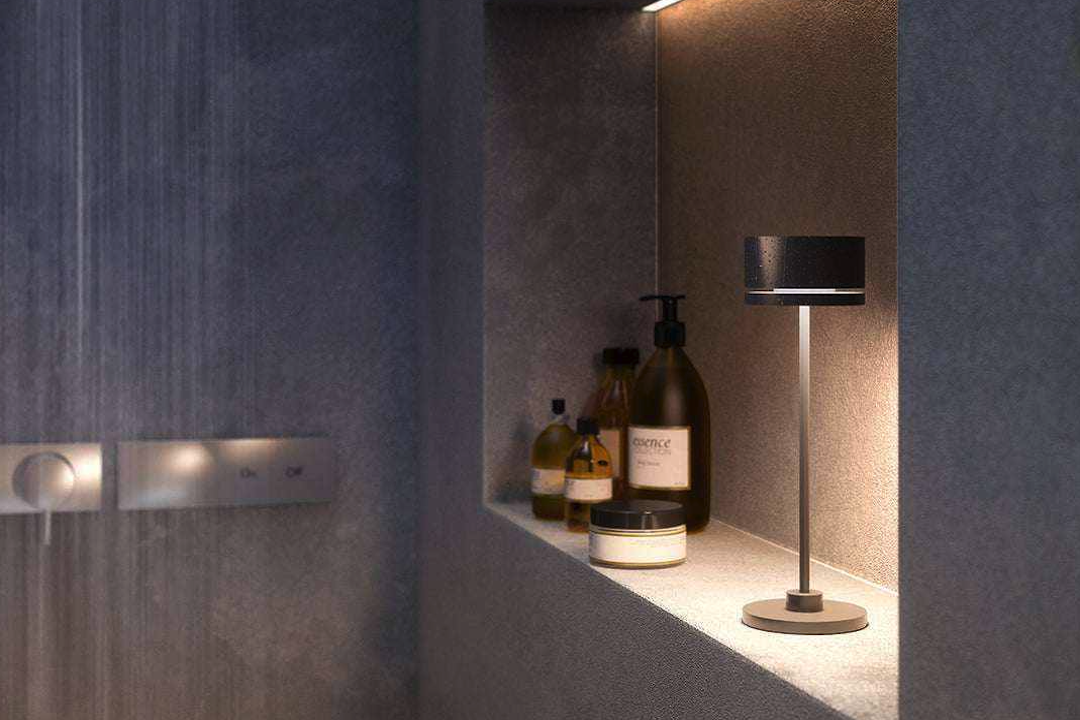
In a sprawling powder room or a guest bathroom that sees very little direct grooming, a decorative, damp-rated table lamp could be used for ambient light.
- Ample Counter Space: This requires a very large vanity with abundant counter space, allowing the lamp to sit far from the sink and away from any splash zones.
- Supplemental Lighting Only: The table lamp would serve purely as an accent or secondary light source, complementing other, more functional vanity lighting like sconces or an integrated mirror.
- Aesthetic Focus: Its primary purpose would be decorative, contributing to the room’s overall aesthetic rather than providing functional illumination.
Strict Safety Requirements
Even in these rare instances, the lamp must meet stringent safety standards.
- Damp Rating: It would need adequate damp-rating (IP44 or higher) for the bathroom environment. Most standard decorative table lamps lack this.
- GFCI Outlets: Plugged into a Ground Fault Circuit Interrupter (GFCI) outlet, which provides an extra layer of shock protection by quickly cutting power if a surge or short circuit occurs.
In summary, while the idea of a stylish table lamp on a contemporary vanity corner might seem appealing from a purely aesthetic standpoint, its practical drawbacks in terms of task illumination, safety, and space efficiency almost always outweigh its decorative potential for functional vanity lighting. Stick to purpose-built, damp-rated, wall-mounted fixtures for bright, safe, and effective results.